By Passman Akpos
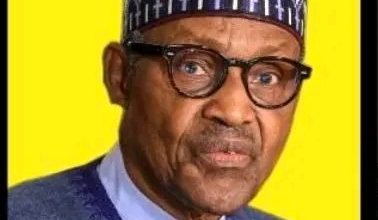
Former Kaduna State Governor, Nasir Ahmad El-Rufai, has appealed to Nigerians and political actors to allow late President Muhammadu Buhari to “rest in peace,” warning against what he described as growing attempts to politicise and rewrite the former leader’s legacy.
In a strongly worded statement titled “Let President Muhammadu Buhari Rest in Peace,” dated December 17, 2025, and released from Cairo, Egypt, El-Rufai reacted to the recent launch of a book on Buhari’s life and legacy, which he said had reopened old divisions within the late president’s political family.
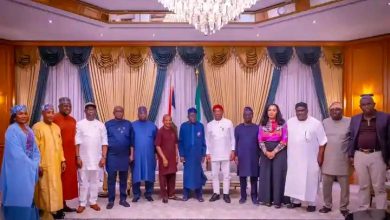
According to El-Rufai, the book launch was marked by visible factionalism, with only one camp from Buhari’s former inner circle dominating the event, while others who were equally close to the late president were conspicuously absent. He described both the selective participation and the choice of venue as “red flags,” suggesting that Buhari’s legacy may be at risk of being shaped to serve narrow political interests rather than historical accuracy.
The former minister expressed particular discomfort over the presence of long-time critics of Buhari—some now occupying high political offices—who offered glowing tributes at the event. El-Rufai accused such figures of hypocrisy, noting that many of them had previously blamed Buhari’s administration for Nigeria’s challenges but now appeared eager to recast history, possibly to deflect responsibility for current governance failures.
“It was unsettling,” El-Rufai said, “to see individuals celebrating Buhari in death who neither enjoyed his trust nor his respect in life,” adding that Buhari was a man who took personal and political loyalty seriously and did not easily overlook disrespect.
While acknowledging that he had not yet read the book, Soldier to Statesman: The Legacy of Muhammadu Buhari, El-Rufai cautioned that media reports suggesting new revelations attributed to the late president appeared one-sided. He warned that presenting selective anecdotes about a complex leader who can no longer respond risks distorting, rather than preserving, his true legacy.
El-Rufai admitted that Buhari’s civilian presidency fell short of the high expectations many supporters held. However, drawing from over a decade of close association with Buhari in opposition politics and governance, he argued that many of the administration’s failures were driven by the actions of a powerful inner circle of relatives, advisers, and officials who did not always reflect Buhari’s personal values.
He maintained that Buhari himself remained, until the end, a man of strong faith, personal discipline, and unquestioned patriotism, urging those now invoking his name for political justification to examine whether they lived by the same standards.
El-Rufai concluded with a nationwide appeal for restraint and fairness, calling on Nigerians—both admirers and critics—to resist opportunism and revisionism.
“The truest way to honour President Muhammadu Buhari,” he said, “is not through selective storytelling or sudden exhibitions of affection, but by upholding the values he embodied: simplicity, integrity, humility, and service to Nigeria.”
He ended the statement with a prayer: “May Allah grant him eternal rest.”