₦4 Million Salary, ₦8 Billion School Fees? “Executhief” Firestorm Erupts As Farouk Ahmed’s Swiss Education Bill Shakes Nigeria

By Passman Akpos
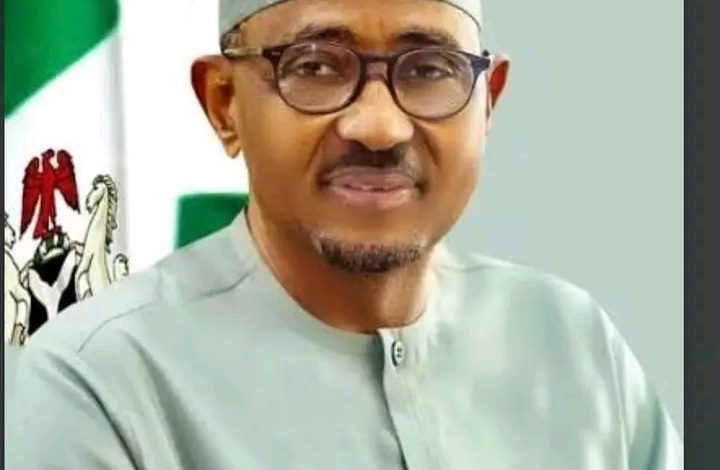
A fresh storm has erupted in Nigeria’s public space following explosive allegations that Engr. Farouk Ahmed, Chief Executive of the Nigerian Midstream and Downstream Petroleum Regulatory Authority (NMDPRA), allegedly spent billions of naira on the foreign education of his children—sums critics insist cannot be reconciled with his official earnings as a public servant.
The controversy, ignited by social commentator Usman Okai Austin and amplified by a statement credited to Africa’s richest man, Aliko Dangote, centres on a simple but troubling arithmetic. Farouk Ahmed’s reported annual salary stands at about ₦48 million—roughly ₦4 million monthly. Over 25 years in government service, that would amount to approximately ₦1.2 billion in cumulative earnings.
Yet, critics ask: how does a public officer with such earnings allegedly fund education expenses estimated at over ₦8 billion?
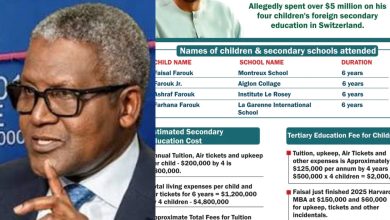
According to figures circulating online, Ahmed is accused of spending more than $5 million on the secondary education of his four children in elite Swiss schools, including Aiglon College, Institut Le Rosey, Montreux School, and La Garenne International School—each for about six years. The breakdown claims annual tuition, upkeep, and travel costs of about $200,000 per child, amounting to roughly $4.8 million over the period.
In addition, the figures allege a further $2 million spent on tertiary education for the four children, alongside an estimated $210,000 in 2025 alone for one child’s Harvard MBA tuition, upkeep, and incidentals.
“Honestly, it seems some people do not really understand what one billion naira means,” Austin wrote, sarcastically suggesting that for the numbers to add up, Ahmed would have had to spend 25 years doing nothing—no food, no house, no car, no travel—except saving every kobo of his salary.
Public reactions have been sharply divided. While many Nigerians describe the allegations as emblematic of elite corruption and inequality—especially as parents in Ahmed’s home state of Sokoto reportedly struggle to pay ₦10,000 school fees—others caution against rushing to judgment.
Some defenders argue that salaries may not tell the full story, suggesting investments, businesses with high turnover, or assets acquired long before his current role. Others note that Ahmed’s salary two decades ago would not have been ₦4 million monthly, calling the calculations simplistic and politically motivated.
Still, critics insist the burden of proof lies with the public officer. “If he has a business with such high turnover, let him show it,” one commentator said, while others called for immediate suspension pending investigation if the government is serious about accountability.
Adding another layer to the controversy is the perception that Dangote’s public stance against a fellow Northerner signals intense pressure within Nigeria’s powerful economic and political circles. “If Aliko is shouting and holding press conferences, then something serious is happening,” one opinion read, warning against monopolies and urging Nigerians to look beyond distractions.
At the heart of the debate is a broader question Nigerians say must no longer be avoided: should the same forensic scrutiny be applied across government—past and present governors, permanent secretaries, and heads of agencies?
For now, no court has established guilt or innocence. But as one recurring refrain echoes across social media: “Facts don’t lie.” Nigerians, many argue, deserve a transparent explanation of how public officials amass vast wealth while serving in office—and whether the math behind their fortunes can truly add up.