Sowore, Apostle Suleman Clash Over ‘Staged Miracles’ Allegations as Legal Battle Deepens, Nigerians React

By Passman Akpos
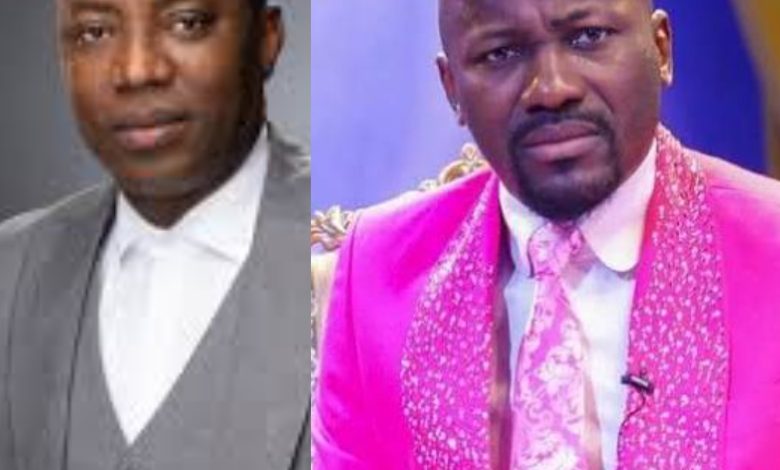
A heated war of words has erupted between activist and former presidential candidate, Omoyele Sowore, and the General Overseer of Omega Fire Ministries International, Apostle Johnson Suleman, over allegations bordering on staged miracles—an exchange that has now spilled fully into the courtroom.
In a strongly worded statement circulating online, Apostle Suleman lashed out at Sowore for amplifying what he described as “senseless and medically implausible” claims made by a guest on a podcast. According to the cleric, the guest had alleged that a former pastor staged miracles by administering injections that caused temporary death before resurrection.
Suleman accused Sowore of republishing the claims without verification simply because his name was mentioned, insisting the move was driven by “traffic and relevance” rather than facts.
> “Despite the individual later coming out publicly to state unequivocally that he had never met me and that the claims were untrue, you refused to retract the publication,” Suleman said, alleging an anti-Christian and anti-church bias.
The cleric disclosed that the matter is already before a court of competent jurisdiction and warned that this would not be the only case.
> “I have also instructed my legal team to go through all the defamatory publications you have ever made against my person and each one of them will be addressed through all lawful means available,” he stated, adding, “He who alleges must prove.”
Suleman also took a swipe at Sowore’s activist credentials, claiming Nigerians were not gullible and had repeatedly rejected him politically.
In response, Omoyele Sowore confirmed that he had indeed been sued, describing the case as the second legal action taken against him by Apostle Suleman. He referenced an earlier, long-running lawsuit involving former associate Stephanie Otobo, which he said was later amended.
> “The case has been ongoing for approximately eight years, and the most straightforward aspect to prove in court would be the matter of miracles,” Sowore said, maintaining that the judiciary—not public sentiment—should resolve the controversy.
Public Divided as Faith, Activism Collide
The clash has sparked intense reactions across social media, with opinions sharply divided.
Some Nigerians welcomed the decision to settle the matter in court rather than through law enforcement, arguing that due process should prevail. Others questioned whether a cleric should resort to litigation at all, citing biblical teachings on forgiveness and persecution.
Supporters of Apostle Suleman flooded comment sections with personal testimonies of healing, spiritual encounters, and life-changing experiences they attribute to his ministry. Several argued that past controversies only amplified his message and drew more people to faith.
Critics, however, mocked the lawsuit and called for miracles to be “proven” in court, with some dismissing the cleric as a “pulpit charlatan” and others questioning the demand for alleged damages.
Yet amid the noise, a recurring sentiment emerged from neutral observers: let the courts decide.
As the legal showdown unfolds, the case is shaping up to be more than a personal dispute—touching on freedom of expression, the scrutiny of religious leaders, and the limits of activism in Nigeria’s charged public space.