Reno Omokri Defends Historical Claims on Isaac Adaka Boro, Counters Allegations of Falsehood

By Passman Akpos
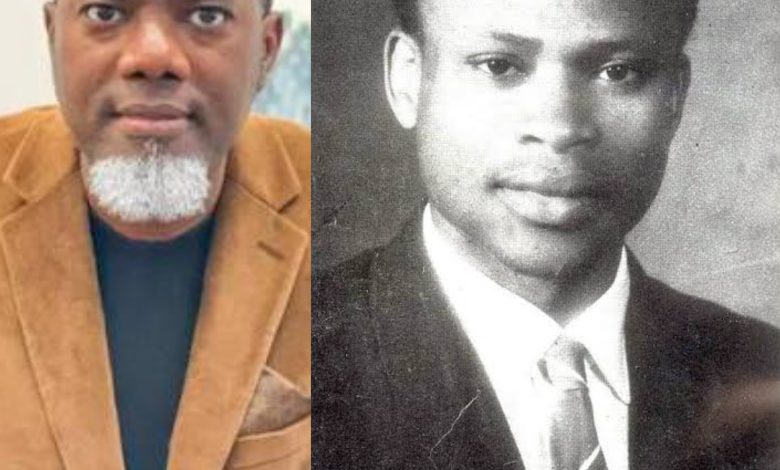
Public commentator and author, Reno Omokri, has defended the accuracy of his historical recounting of the late Niger Delta activist, Isaac Adaka Boro, dismissing claims that his narrative contained false information. In an open response addressed to an individual identified as Arthur, Omokri insisted that his account was backed by archival evidence, including publications from the Daily Times of that era.
According to Omokri, Boro’s 1966 rebellion—popularly known as the 12-Day Revolution—was rooted in grievances over the distribution of oil revenues within Nigeria’s regional structure. At the time, he explained, the Eastern and Mid-Western Regions exercised significant control over resources extracted from their territories, remitting only a portion to the central government. Boro, who believed the Niger Delta was being marginalized, sought a plebiscite similar to the one that saw Southern Cameroons vote to leave Eastern Nigeria in 1961.
Omokri recounted that Boro’s attempted secession on February 23, 1966, prompted Eastern Region military governor, Lt. Col. Chukwuemeka Odumegwu-Ojukwu, to deploy troops. When initial efforts were unsuccessful, Ojukwu reportedly sought assistance from the central government led by Major General Johnson Aguiyi-Ironsi.
Following Boro’s capture, Ironsi issued the controversial Unification Decree No. 34 on May 24, 1966, which abolished regional autonomy and centralized control of resources, including oil.
Omokri noted that Boro’s sentencing on June 21, 1966, triggered mixed reactions across Nigeria—celebration in one region and unrest in others. Soldiers in the Northern and Western Regions reportedly questioned why Boro’s case was expedited while Major Chukwuma Kaduna Nzeogwu and the January 15 coup plotters, who had killed civilians, had not been similarly prosecuted.
He further cited historians who argue that Boro’s death sentence contributed to tensions leading to the July 29, 1966 countercoup, which reshaped Nigeria’s political trajectory.
Clarifying his position, Omokri stated that these details are well-documented and publicly verifiable.
The statement was signed with his customary self-descriptions, identifying himself as a “Gospeller,” “Deep Thinker,” bestselling author, and award-winning humanitarian.