“Tinubu Orders Mass Pullout Of Police From VIPs — NSCDC To Guard Elites As Security Experts Warn Of Chaos”


By Paul Ebi
President Bola Ahmed Tinubu has reaffirmed his directive for the withdrawal of police officers attached to influential individuals, insisting that the country urgently needs more security manpower deployed to areas battling terrorism, kidnapping, and violent crime.
Speaking during the Federal Executive Council (FEC) meeting on Wednesday, Tinubu instructed the Minister for Interior, Olubunmi Tunji-Ojo, to collaborate with the Inspector General of Police (IGP), Kayode Egbetokun, and the Nigeria Security and Civil Defence Corps (NSCDC) to immediately replace withdrawn police orderlies with NSCDC personnel.
“The Minister for Interior should liaise with the IGP and the civil defence structure to replace those police officers who are on special security duties so that you don’t leave people exposed,” the President directed.
He noted that while exceptions would be considered for individuals with heightened security concerns, Nigeria could not afford to starve volatile areas of essential police presence.
“We face challenges here and there of kidnapping and terrorism. We need all the forces that we can utilise,” Tinubu stressed.
11,566 POLICE OFFICERS WITHDRAWN SO FAR
Tinubu’s FEC comments reaffirmed his November 24 directive ordering the police to withdraw from all Very Important Persons (VIPs).
The IGP later confirmed that 11,566 police personnel have already been recalled, with redeployment to underserved communities currently ongoing.
The recall is intended to boost police response capabilities in rural and high-risk areas long neglected due to limited manpower.
SENATE QUESTIONS SELECTIVE ENFORCEMENT
While the initiative has drawn praise from many Nigerians, controversies emerged over implementation.
The Senate, on Wednesday, ordered its Committee on Police Affairs to investigate an alleged selective withdrawal, following claims that lawmakers were being singled out while ministers, wealthy elites, political families and even celebrities retained heavy police protection.
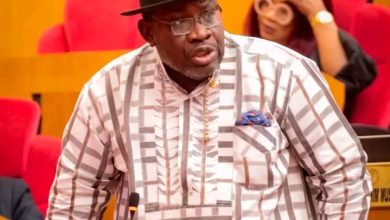
Senator Abdul Ningi raised strong objections, warning that lawmakers were being put at risk.
“I have seen ministers with heavy security, business concerns with their orderlies, children of political office holders with orderlies, and even singers enjoying full protection. But a Senator cannot have even one orderly? This is unheard of,” he stated.
NDUME: “IT’S AN INSULT”
Senator Ali Ndume (Borno South) argued that indiscriminate withdrawal risks security vulnerabilities and condemned what he described as wasteful deployment within the National Assembly.
He alleged that some ministers even assign police escorts to their wives and children.
“What is their business with that?” he asked.
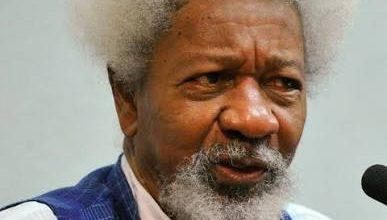
WOLE SOYINKA REACTS, CITES SECURITY DETAIL WITH SEYI TINUBU
Nobel laureate Wole Soyinka weighed into the debate, recounting the overwhelming security presence he observed during an encounter with Seyi Tinubu, son of the President.
He likened the detachment to a “battalion”, arguing that such displays undermine efforts to free up police resources for public safety.
SECURITY EXPERTS WARN: NSCDC NOT READY
While Tinubu insists that NSCDC personnel will replace withdrawn orderlies, security experts caution that the corps may lack the manpower and training to take on VIP protection duties.
Former DSS Director, Mike Ejiofor, issued the strongest warning.
“The NSCDC does not have the capacity. They don’t have the numbers to deploy and their statutory function is to protect critical infrastructure. You would also have to train them for VIP protection,” he said.
Retired AIG Abutu Yaro also urged careful planning to prevent unexpected consequences.
NATION WAITS FOR IMPLEMENTATION BLUEPRINT
Tinubu has directed the National Security Adviser (NSA) and DSS to review the deployment structure and present clear recommendations.
For now, the Presidency insists the withdrawal order will be enforced, but the Senate and security stakeholders are pushing for uniform implementation, warning that selective compliance could spark institutional distrust.
The unfolding situation has placed the country’s security framework under unprecedented scrutiny, as Nigerians watch to see whether the policy will increase police effectiveness—or trigger new vulnerabilities.